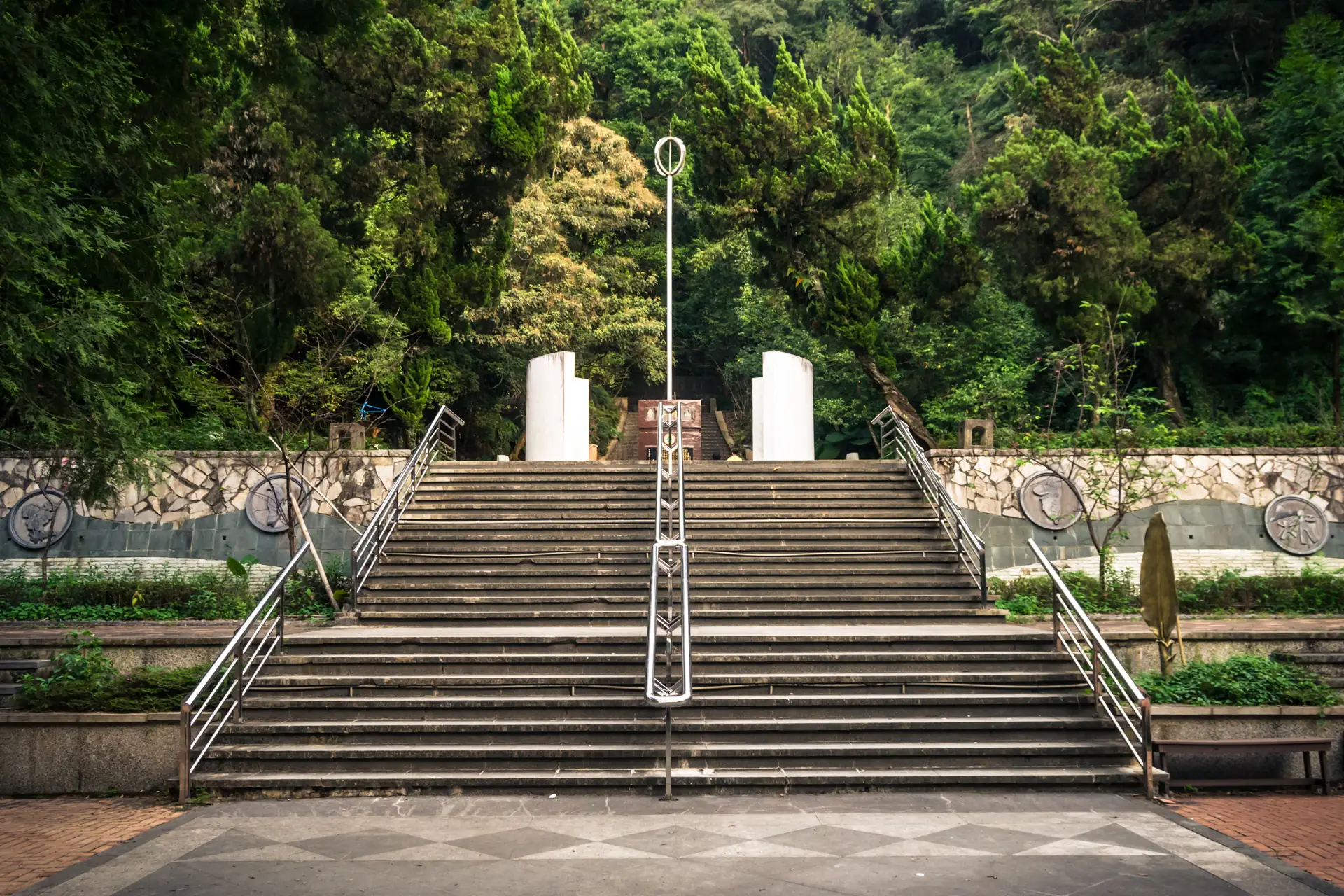
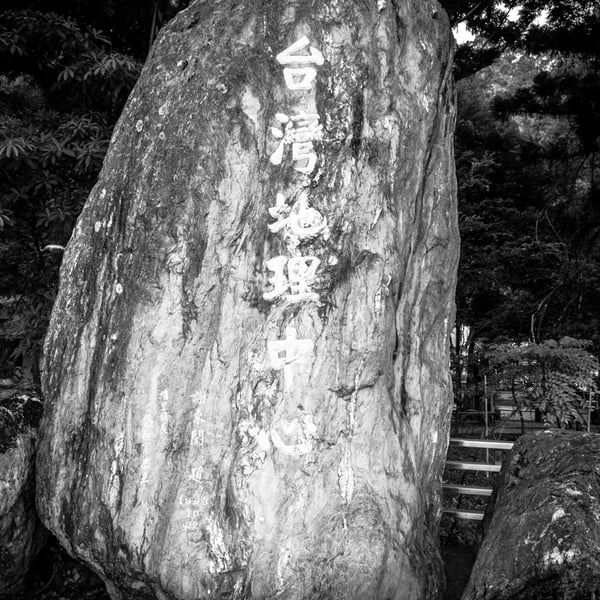
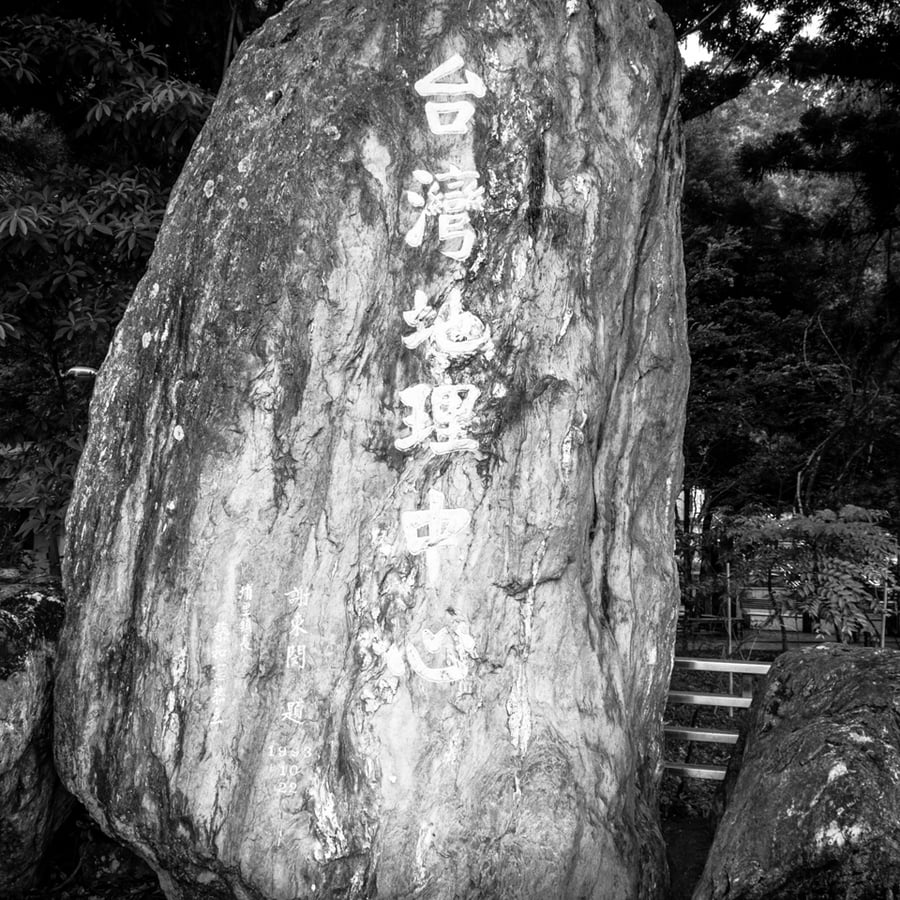
The Geographic Center of Taiwan (台灣地理中心) is a modest roadside attraction at Hǔtóushān (虎頭山), literally “Tiger Head Mountain”) in Puli, Nantou, on the way to bigger attractions like Qingjing Farm (清境農場). As the name implies, it marks the geographic center of the island of Taiwan, albeit with a bit of a twist: there are actually two monuments here, one at the base of the mountain and another near the peak at 555 meters above sea level. It’s about a ten minute hike to get to the real center of Taiwan!
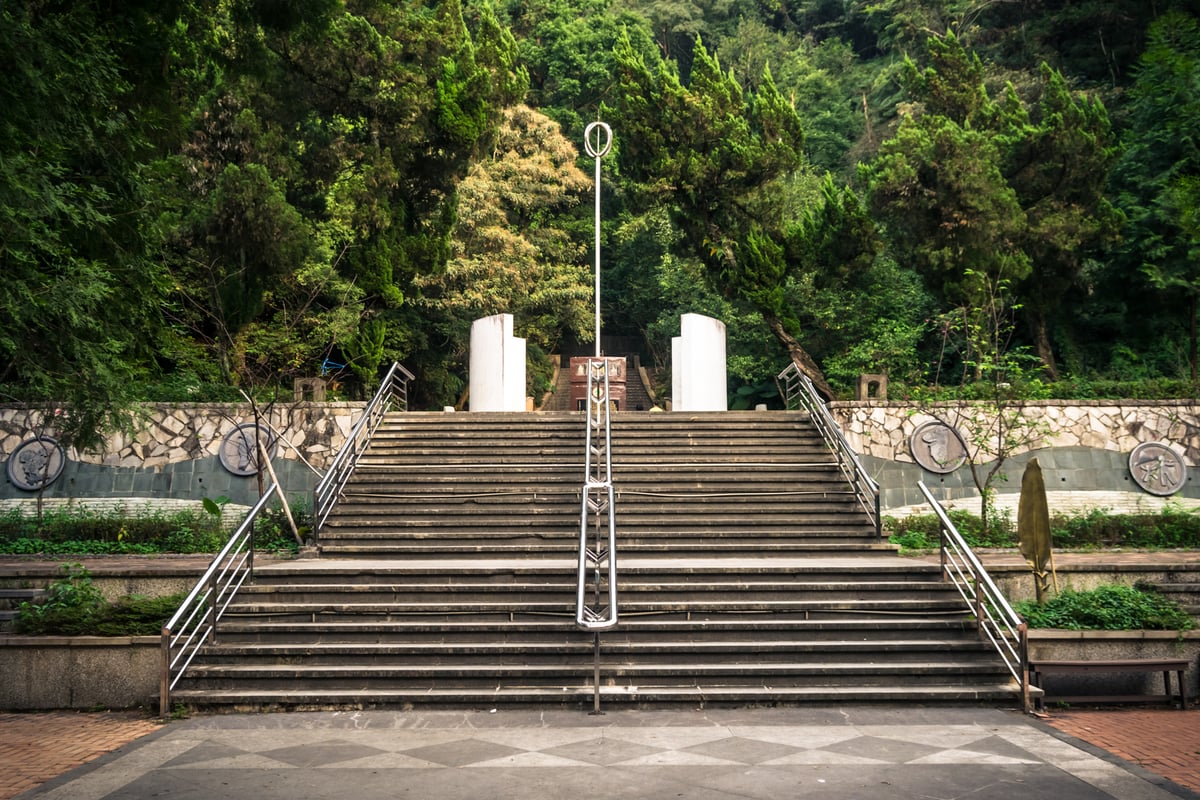
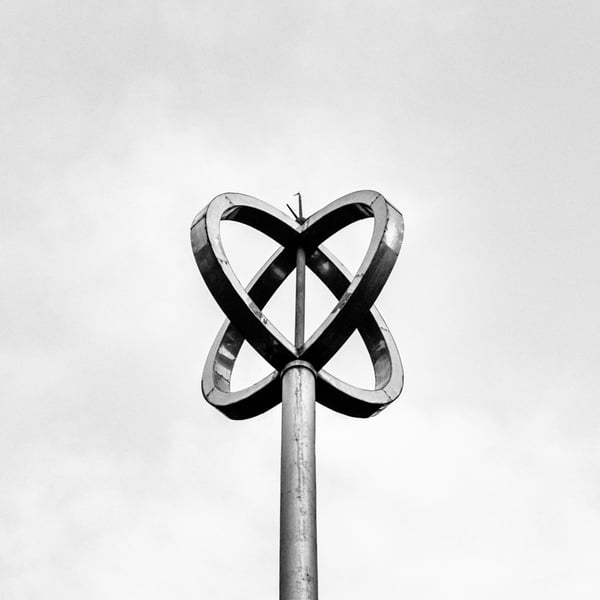
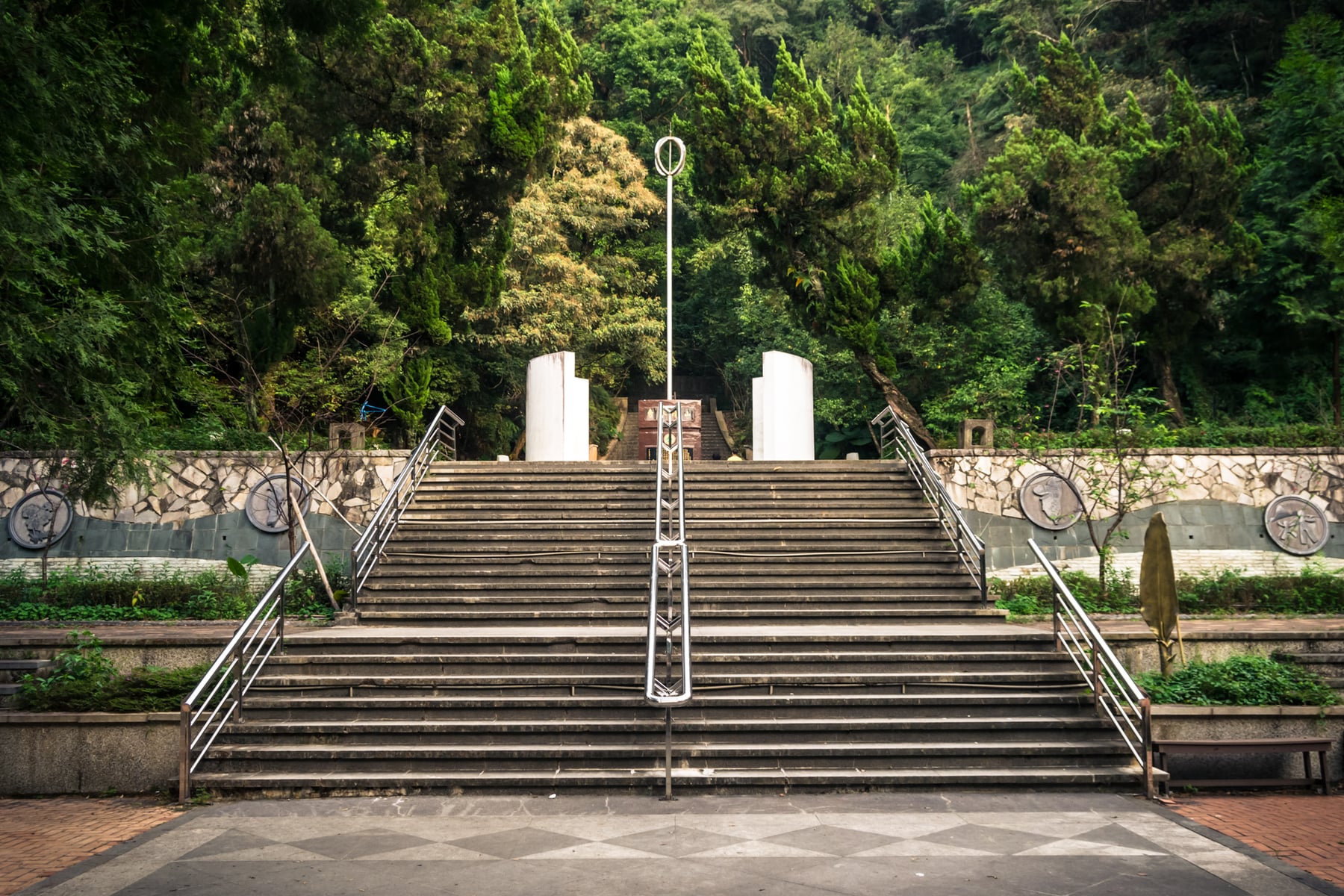
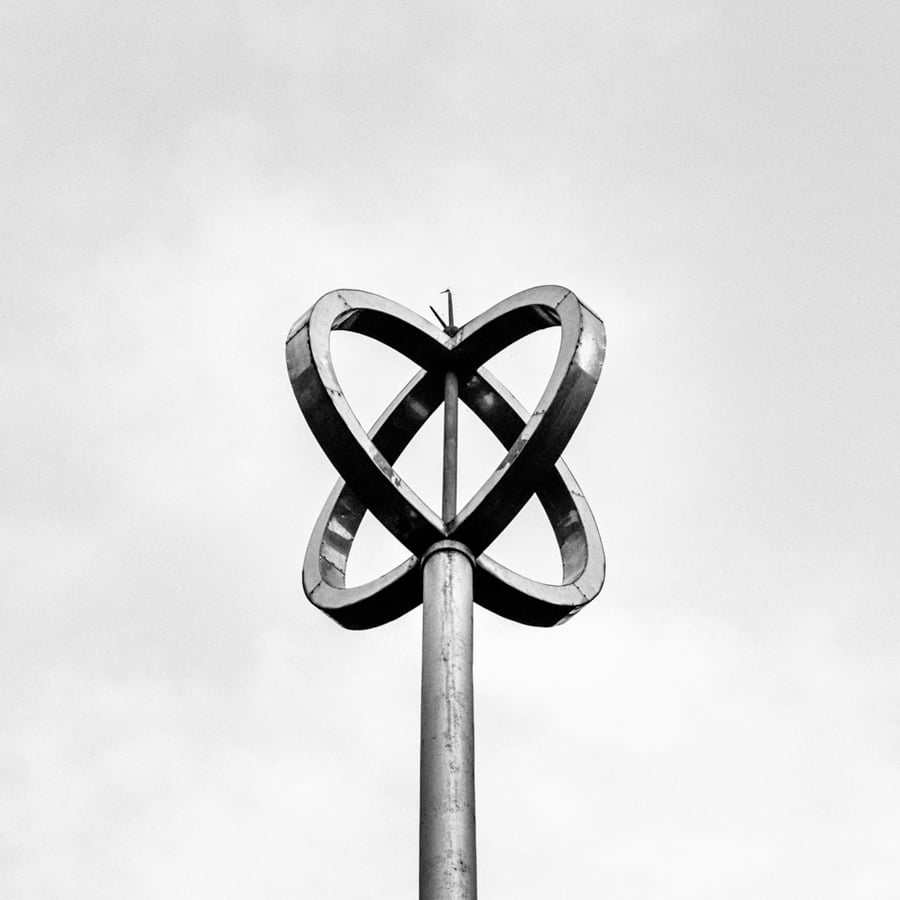
The monument at the base of the mountain dates back to the 1970s and features an inscription by the late Chiang Ching-Kuo, former president of the Republic of China, that reads something along the lines of “pure mountain, beautiful water” (山清水秀). The concentric steel rings mounted on top of the pole also form the basis of the logo for the city of Puli and can be seen in various forms around town. This monument also marks the geographic center identified in Japanese colonial times using a system of triangulation points, one of which can be found beneath nearby Huaguo Theater.
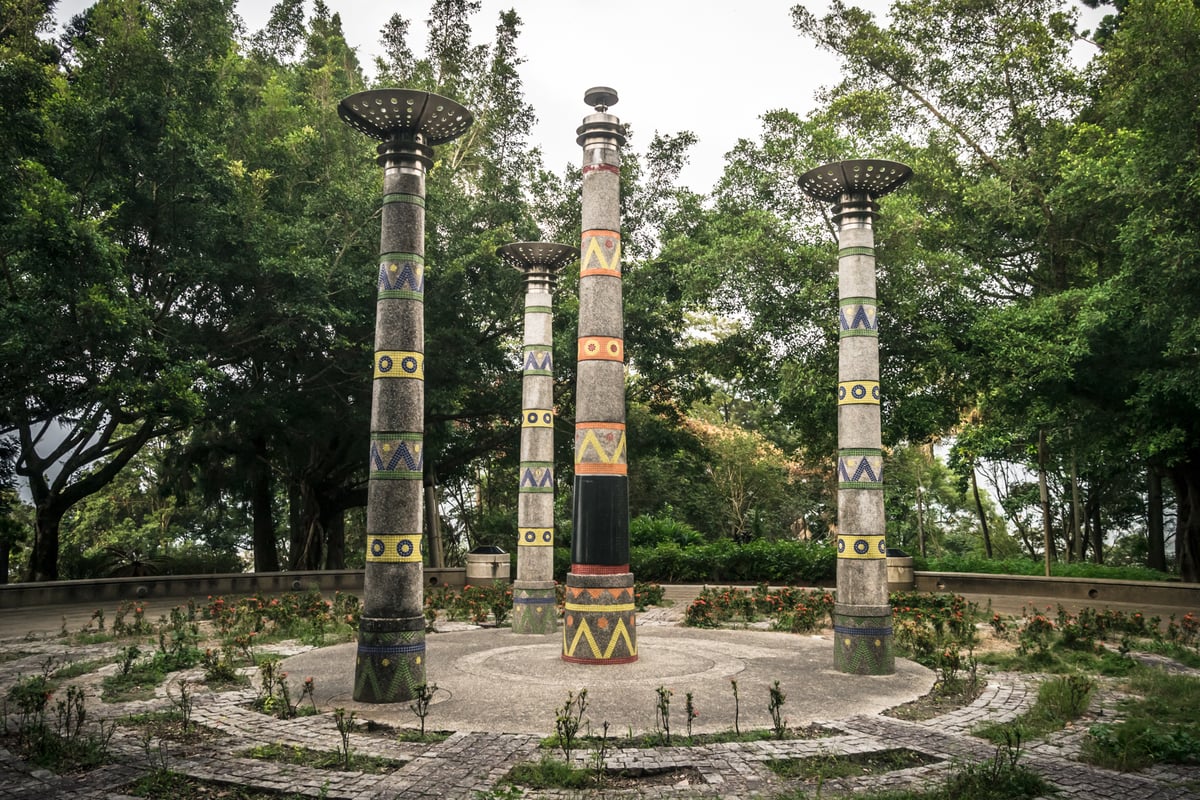
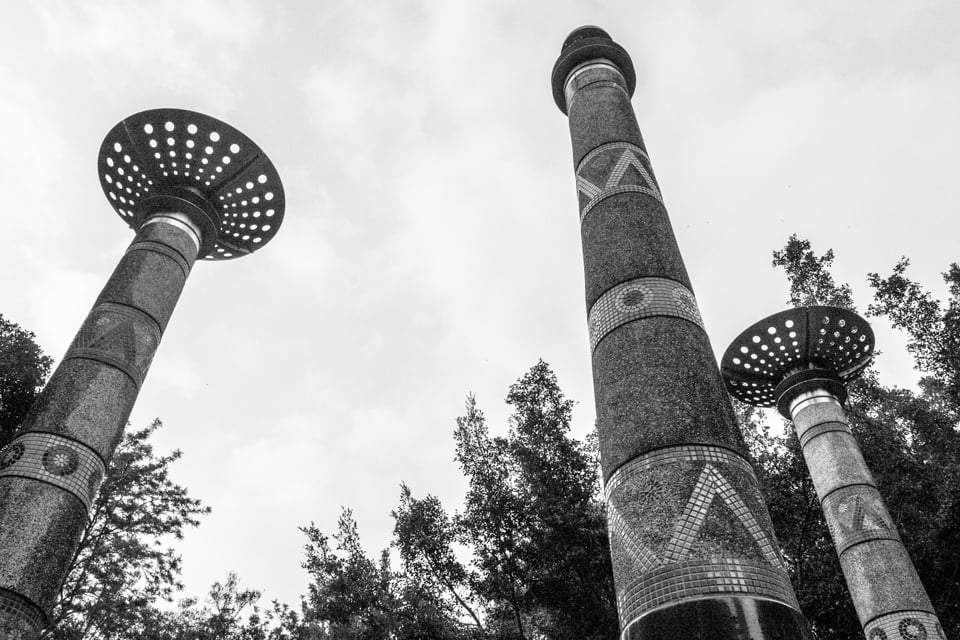
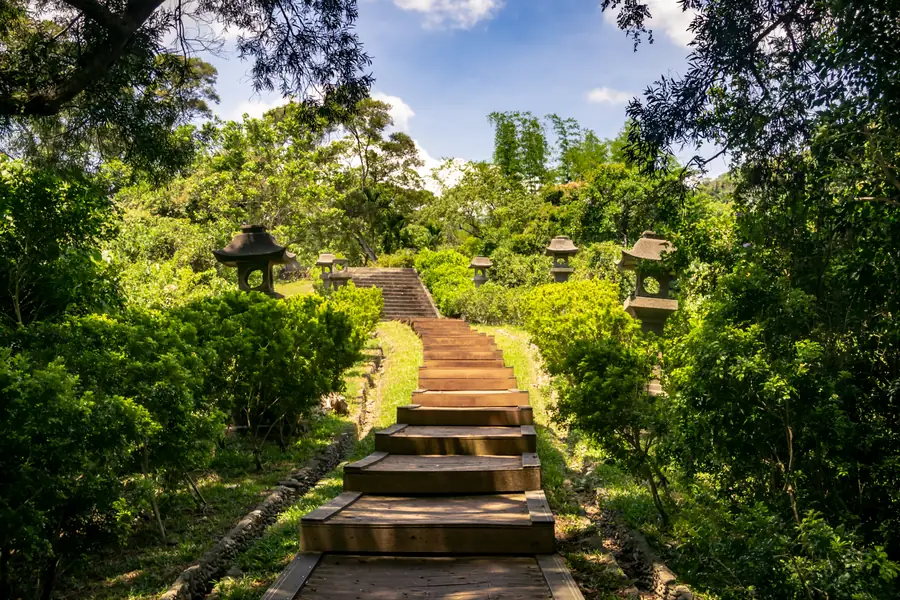
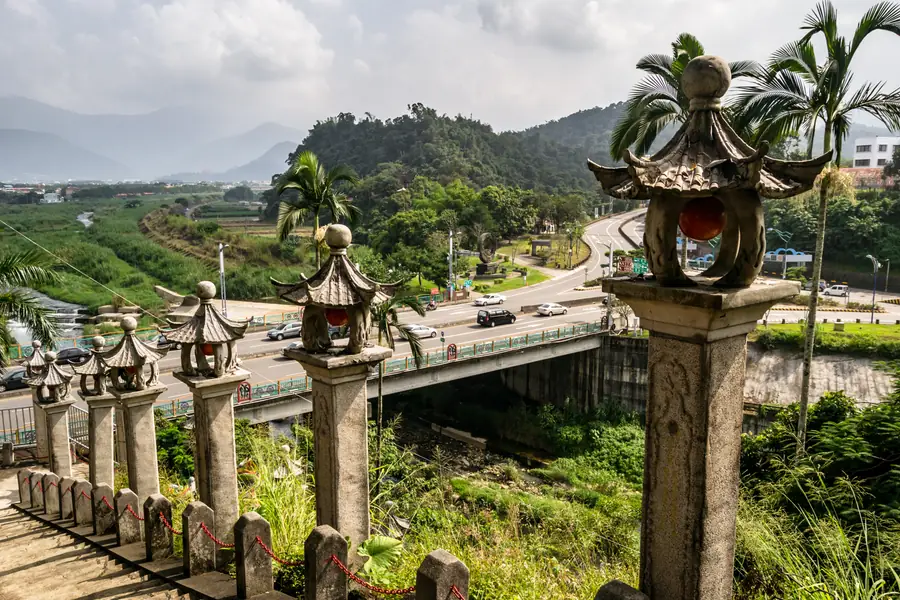
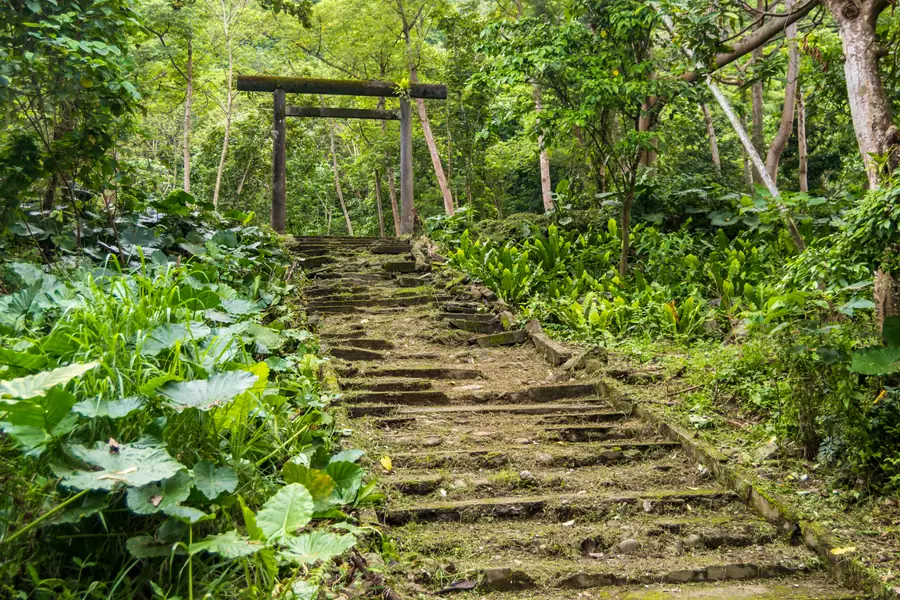
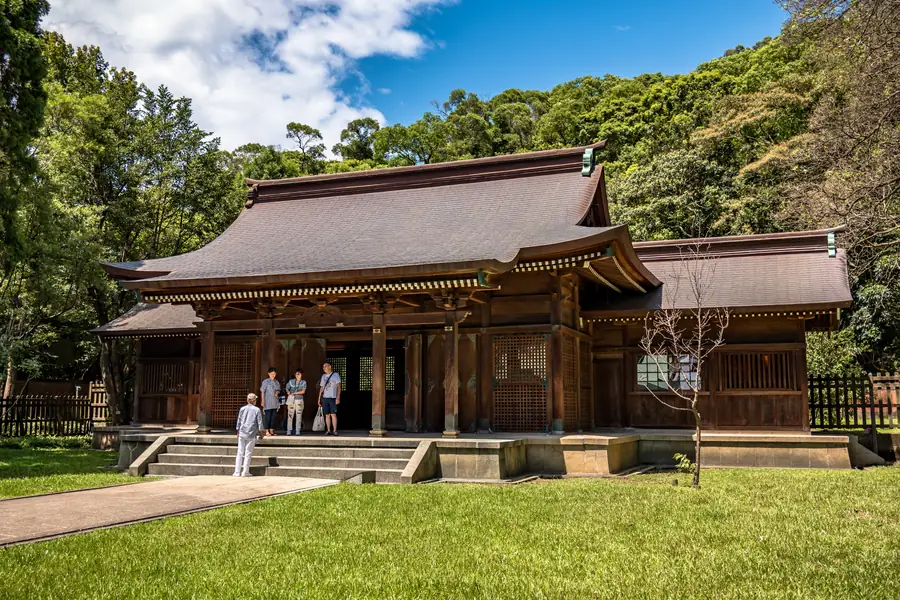
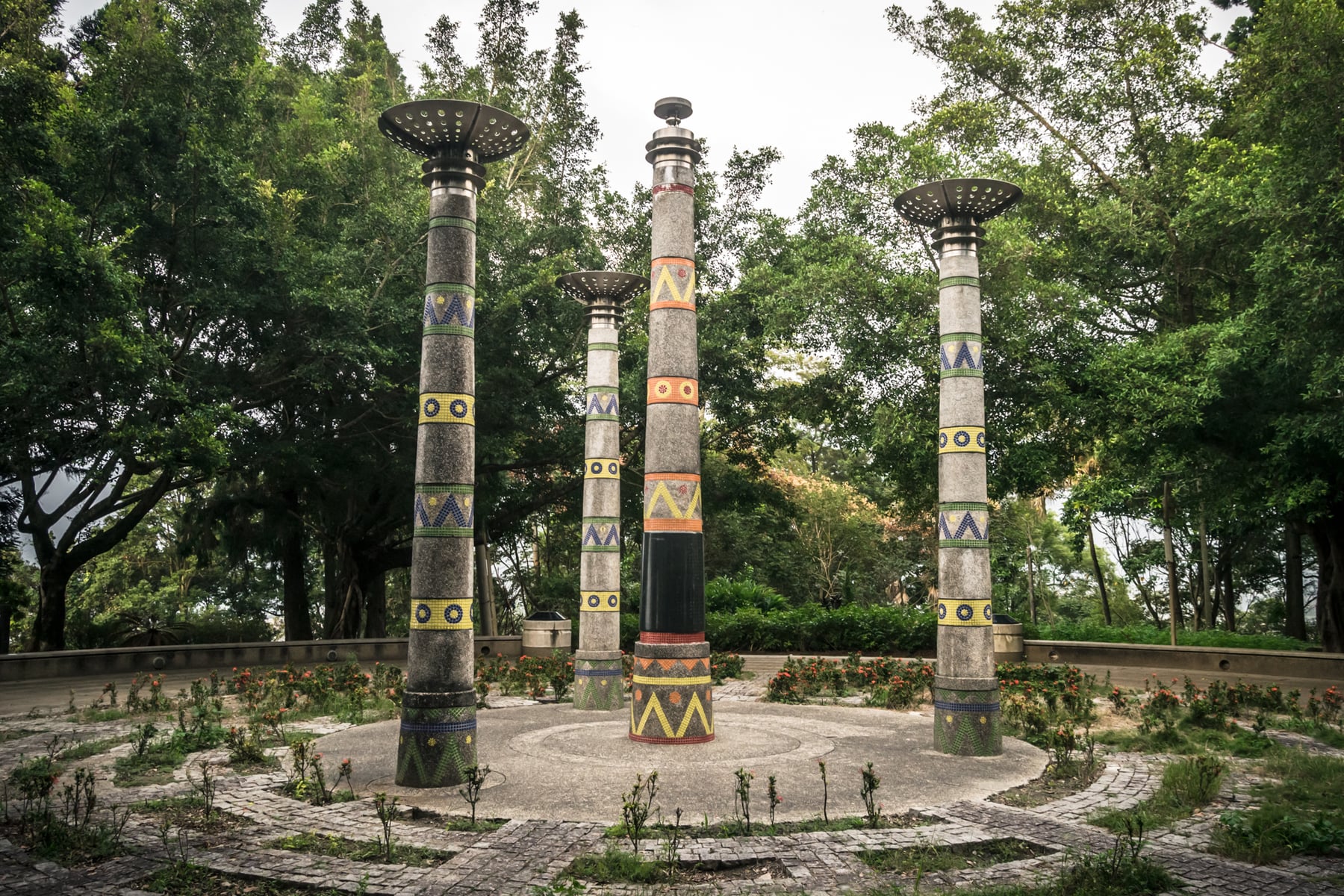
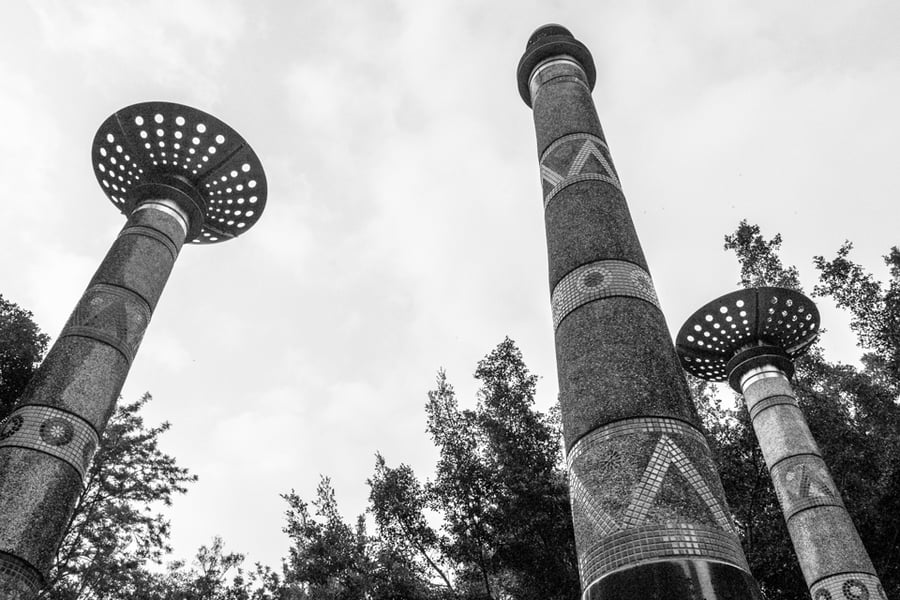
The second, more recently installed monument marks the point identified using more modern surveying techniques. This monument, a curious set of vaguely Indigenous columns with flared tops, is actually located on the former site of the Nōkō Shinto Shrine (能高社), originally inaugurated in March 1925. The Japanese built Shinto shrines all over Taiwan that were later repurposed or destroyed by the Kuomintang, usually by the mid-1970s. Traces of the old stone lanterns that used to line the trail to the mountaintop can be found hidden in the bush but I didn’t notice any while I was there, having only learned about this while doing research for this post. Other artifacts like the guardian lions and several intact stone lanterns were moved across town to Xǐnglíng Temple (醒靈寺).
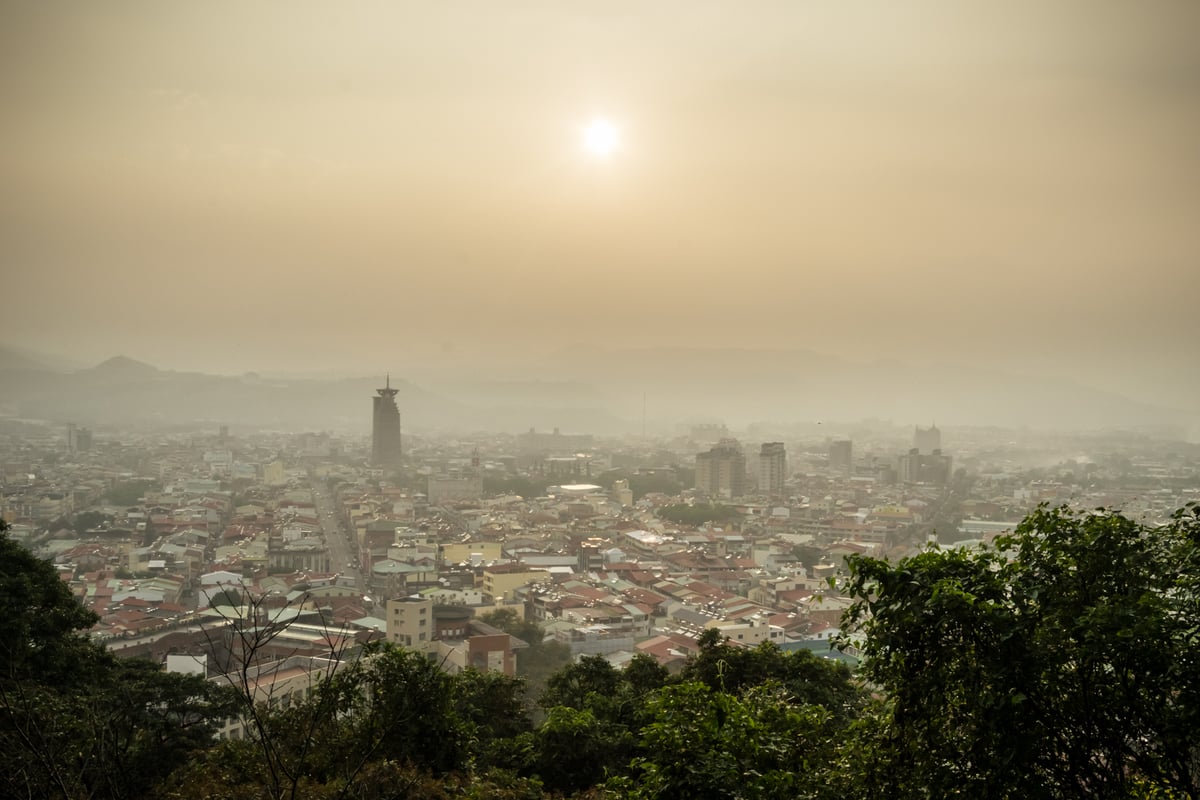
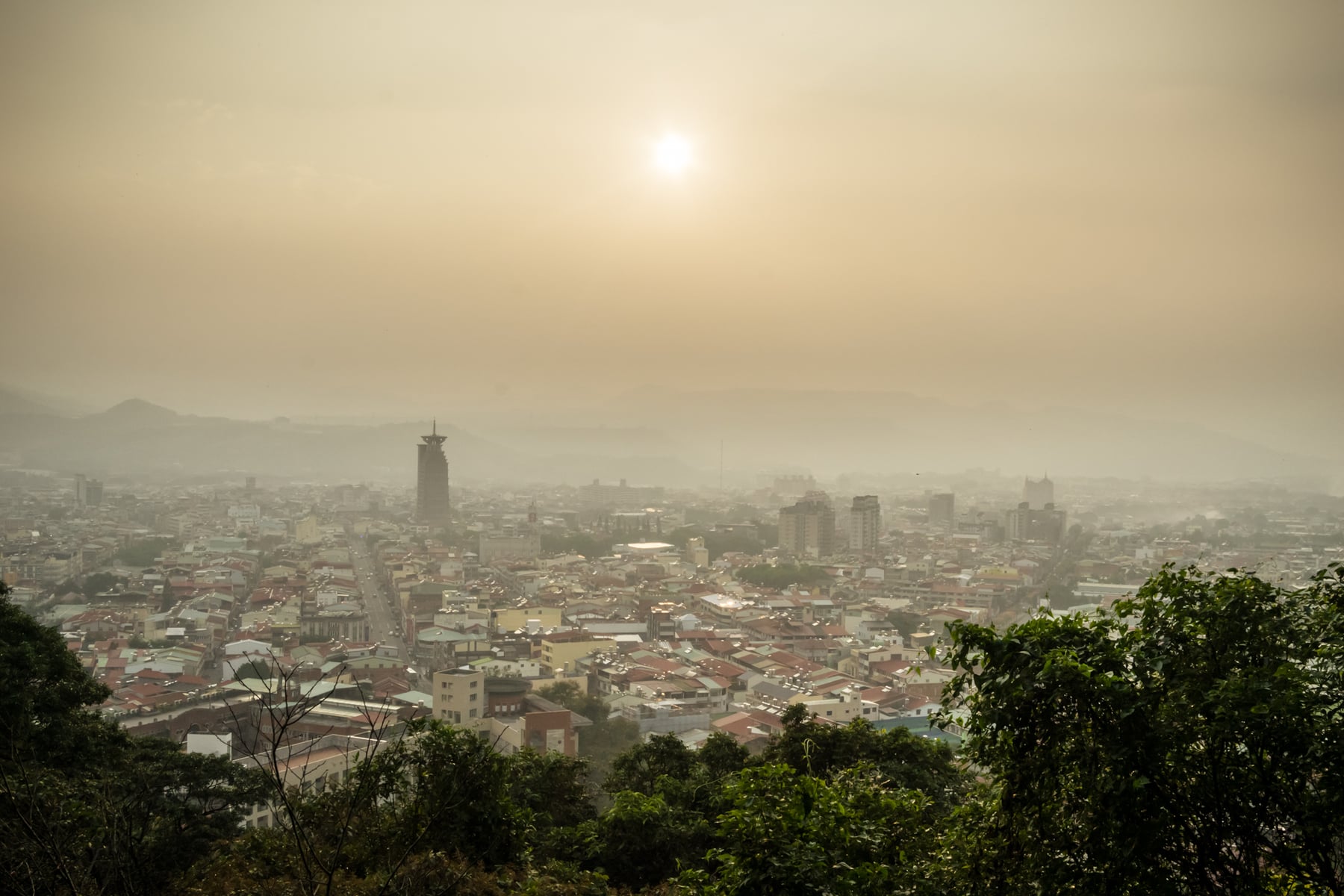
The other thing to check out when you hike up Hutuoshan is the view across Puli Basin (埔里盆地). It was rather hazy while I was there, a common situation in wintertime despite there not being a lot of industry in the area. Eastward winds bring air pollution from China and the rest of Taiwan into the basin—but the outflow is blocked by the Central Mountain Range (中央山脈) and Puli ends up suffering from remarkably bad air quality. This haze makes for interesting sunsets but it wasn’t pleasant to breathe on the way up the mountainside.
Overall it was half an hour well spent at the geographic center of the island and I’d recommend it to anyone passing through on the way to parts beyond.
Map
Details
- Status:Public (公有)
- Coordinates:
Links
- Wikipedia in Chinese (中文維基百科)
- Wild Land Travel (-地球上的火星人-下巴 (野地旅))
- Taiwan Jinjiya (嘉義縣日本時代博物館學會)
Themes
- Japanese Colonial Era Taiwan (台灣日治時代)
- Shinto Shrines in Taiwan (台灣神社)
- Tourist Attractions in Taiwan (台灣旅遊景點)
Series: Nantou Road Trip 2015
This series features notes and photos from several days of riding around Nantou in late 2015. I set forth from Taichung, bound for a music festival, and ended up taking a number of interesting side trips to areas not commonly discussed on the English language web.
- The Geographic Center of Taiwan (台灣地理中心)
- Puli Huaguo Theater (埔里華國戲院)
- Shuili Snake Kiln (水里蛇窯)
- Jiji Wuchang Temple (集集武昌宮)
Backlinks
- Puli Huaguo Theater (埔里華國戲院)
Nearby Locations
Similar Content
Author

I am a web application developer, photojournalist, urban explorer, and history enthusiast passionate about the open web and documenting my experiences on this planet. This project was founded in the early 2010s and has evolved into a sort of personal Wikipedia of places that interest me (and often the photographs I’ve taken there). I’m originally from Toronto, Canada, but spend most of my time residing in Taiwan.