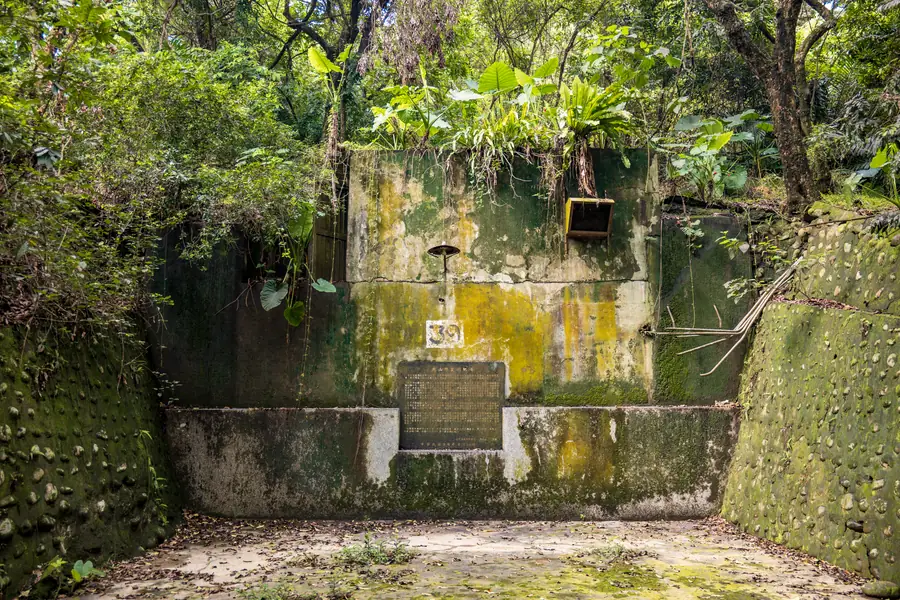
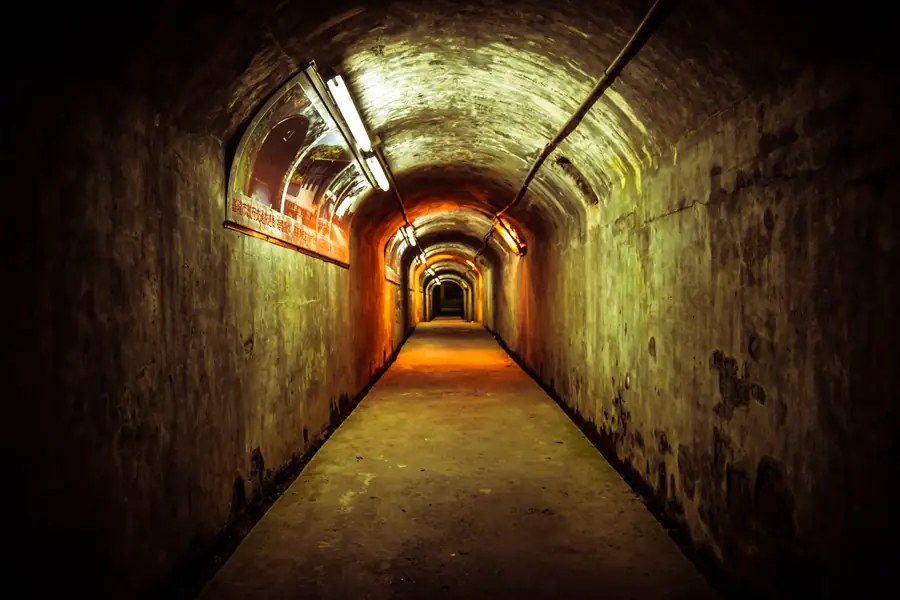
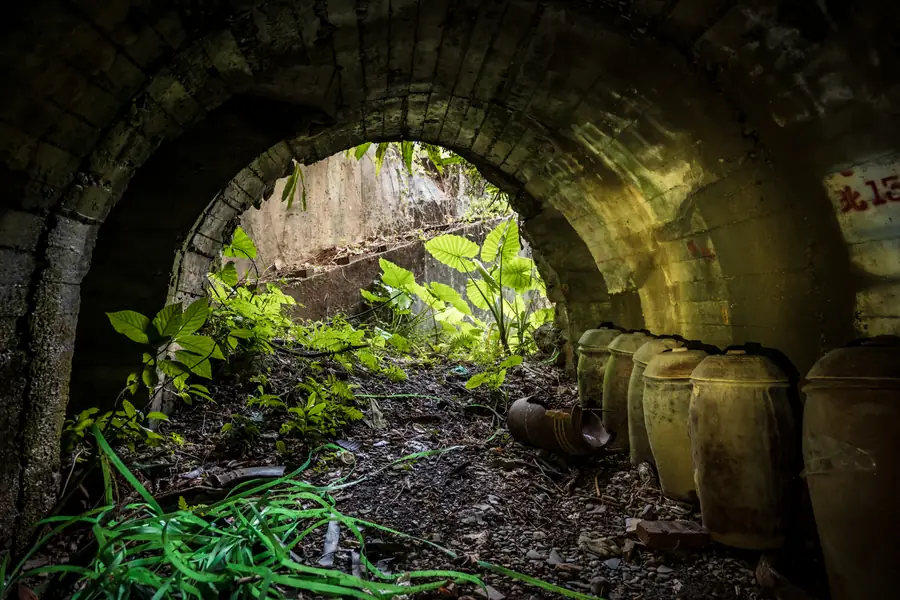
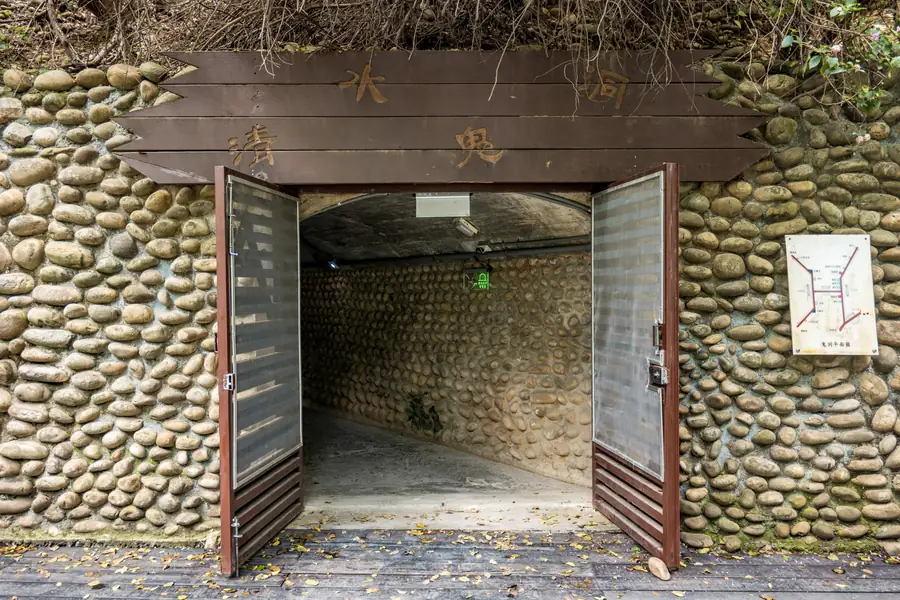
A bunker cut into a rocky outcrop at Hushan (虎山) above Songshan Fengtian Temple in what is now Xinyi District, Taipei. It featured four stone chambers and a machine gun position facing Datunshan (大屯山). The Japanese military completed it late in World War 2, presumably due to concerns about an Allied landing and march on Taipei from the northeast, but surrendered before it saw use, and residents came to call it the “Japanese Cave”.
After the war a statue of Chiang Kai-shek stood on the plaza outside, and Hou Hsiao-hsien filmed military service scenes here for Dust in the Wind (戀戀風塵) in 1986. It was later occupied by a folk religious group who chiselled the chamber walls and carved a painted dragon relief into the rock beside the entrance. By 2003 a karaoke parlour operated out of the inner chamber with an entrance to the south. A shrine later known as Longshan Temple (龍山宮) accreted around the north entrance; for this reason the cave itself is often called Longshan Cave (龍山洞). After the National Property Administration (國有財產署) sued to recover the land, the structures around the entrance were cleared in 2025, and the bunker now stands fenced off with sheet metal.
Map
Details
- Status:Idle (閒置)
- Coordinates:
Themes
- Japanese Colonial Era Taiwan (台灣日治時代)
- Temple Culture in Taiwan (台灣的寺廟文化)
- World War 2 History in Taiwan (台灣第二次世界大戰歷史)
- Military Fortifications in Taiwan (台灣碉堡)
Nearby Locations
Similar Content
Author

I am a web application developer, photojournalist, urban explorer, and history enthusiast passionate about the open web and documenting my experiences on this planet. This project was founded in the early 2010s and has evolved into a sort of personal Wikipedia of places that interest me (and often the photographs I’ve taken there). I’m originally from Toronto, Canada, but spend most of my time residing in Taiwan.