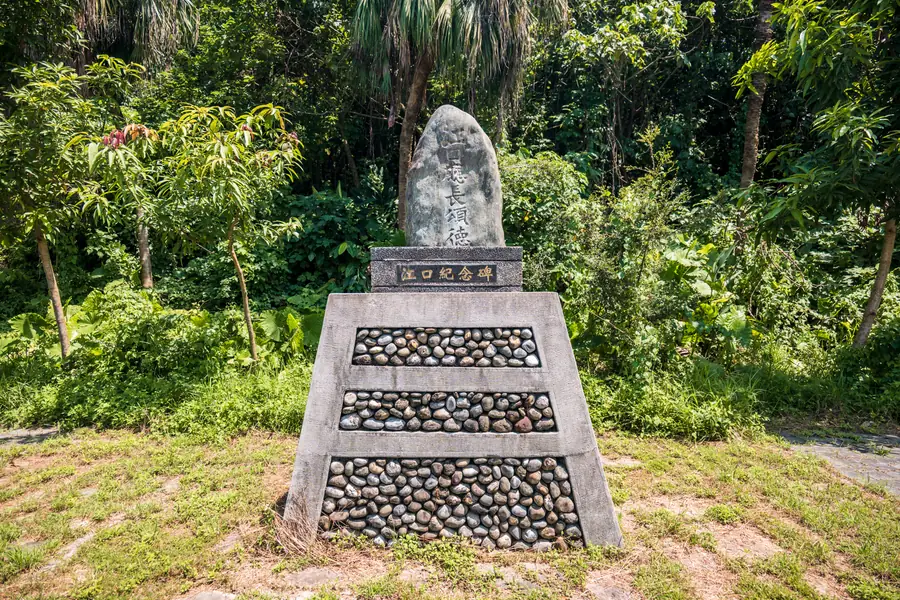
A monument at the grave of Walis Buni (瓦歷斯·布尼), last chief of Paran (巴蘭社), the most powerful Seediq community around Wushe (霧社) at the outset of Japanese rule, in the Gaofeng (高峰) area of Ren’ai, Nantou. Having led the resistance at Renzhiguan in 1902, he later advocated coexistence with the Japanese, kept Paran neutral during the Wushe Incident of 1930, and negotiated the survival of the 514 people who surrendered from the six rebelling communities, who were then relocated to Kawanakajima (川中島), now Qingliu (清流). The colonial government erected a monument after his death, and in 2013 Ren’ai Township began rebuilding the long-neglected grave as a memorial cemetery with funding from the Council of Indigenous Peoples.
Map
Details
- Status:Public (公有)
- Coordinates:
Links
- Wikipedia in Chinese (中文維基百科)
- Liberty Times (自由時報)
Themes
- Japanese Colonial Era Taiwan (台灣日治時代)
- Indigenous People of Taiwan (台灣原住民)
Nearby Locations
Similar Content
Author

I am a web application developer, photojournalist, urban explorer, and history enthusiast passionate about the open web and documenting my experiences on this planet. This project was founded in the early 2010s and has evolved into a sort of personal Wikipedia of places that interest me (and often the photographs I’ve taken there). I’m originally from Toronto, Canada, but spend most of my time residing in Taiwan.